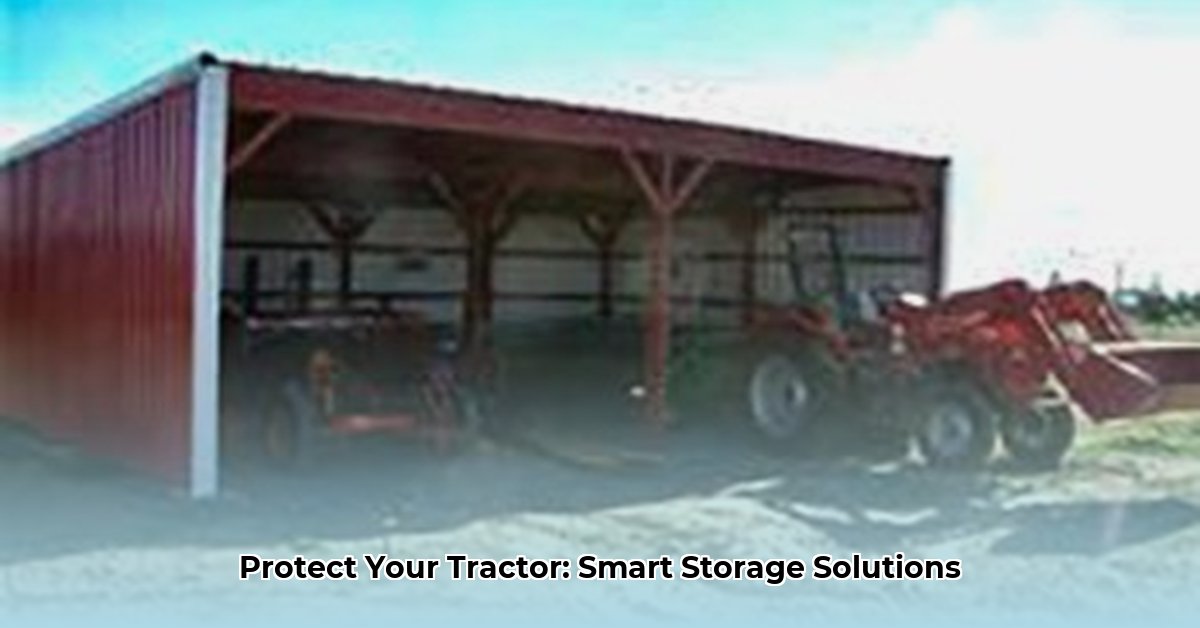
Keeping your tractor in top condition involves more than just regular maintenance; it demands smart storage solutions. Protecting your investment from the elements, pests, and wear and tear is crucial for longevity and cost savings. This guide explores the best long-term tractor storage options, comparing DIY solutions, prefabricated steel structures, and eco-friendly wooden barns. We'll analyze costs, protection levels, and environmental impacts to help you make an informed decision. For more detailed information on building a storage shed, check out this helpful resource: Storage Shed Guide.
Choosing the Right Tractor Storage: A Comparison
Selecting the ideal tractor storage depends on budget, available space, and environmental priorities. Let's analyze popular options:
Option 1: The DIY Approach – A Quick Fix (Best for short-term needs)
- Pros: Lower initial costs. Suitable for short-term, seasonal storage. Simple shelters are relatively easy to build.
- Cons: Limited weather protection. Security concerns. Not ideal for long-term storage due to potential durability issues. May not withstand harsh weather conditions.
Option 2: Prefabricated Steel Structures – A Solid Choice (Good for mid- to long-term storage)
- Pros: Durable, weather-resistant, and offer excellent protection. Low maintenance and readily available in various sizes. Provide enhanced security.
- Cons: Higher upfront costs compared to DIY. Steel production has an environmental impact. Requires a level surface for installation. Susceptible to rust without proper maintenance.
Option 3: A Sustainable Wood Barn – The Eco-Friendly Option (Perfect for long-term storage)
- Pros: Aesthetically pleasing. Environmentally friendly if built with sustainably sourced lumber (look for certifications!). Excellent protection and long lifespan with proper maintenance.
- Cons: Higher initial cost. Requires more maintenance than steel to prevent rot, insect infestations, and general wear and tear.
Table 1: Comparing Tractor Storage Solutions
| Feature | DIY Rack/Shelter | Prefab Steel Building | Sustainable Wood Barn |
|---|---|---|---|
| Initial Cost | Low | High | Medium to High |
| Maintenance | High | Low | Medium |
| Durability | Low | High | High |
| Environmental Impact | Low | Medium to High | Low (if sustainably sourced) |
| Security | Low | High | Medium |
Building Your Tractor's Perfect Parking Spot: A Step-by-Step Guide
Careful planning is vital regardless of your chosen option. Follow these steps:
- Assess Your Needs: Determine required space, set a budget, and define necessary protection levels (weather, theft).
- Site Selection: Choose a well-drained, level location with easy tractor access and convenient maintenance.
- Permits & Regulations: Check local building codes and obtain necessary permits before construction.
- Construction: Follow manufacturer instructions for pre-fabricated or wood structures. For DIY, use high-quality materials and ensure secure fastening.
- Ongoing Maintenance: Regular cleaning, prompt problem addressing, and preventative measures (pest control) are essential for all options.
Choosing Sustainable Options: Minimizing Your Environmental Footprint
Prioritizing sustainable materials significantly reduces your environmental impact. Seek certifications like the Forest Stewardship Council (FSC) for wood or opt for recycled steel. Even small choices, such as using reclaimed wood for DIY projects, can make a difference. Efficient insulation minimizes energy consumption and saves money on utility bills.
Prioritizing Protection: Balancing Security and Sustainability
Tractor theft and weather damage are significant concerns. Choosing sustainable materials doesn't mean compromising security. Here's how to balance both effectively:
Wood vs. Metal: A Sustainable Material Showdown
Responsibly sourced wood, especially reclaimed lumber, has a smaller carbon footprint than steel. However, it requires more maintenance. Steel's durability and weather resistance are superior and offer better security, but its production is energy-intensive.
Sustainable Material Selection: A Practical Guide
- Assess Needs: Budget, climate, and tractor size influence material selection and barn dimensions.
- Source Responsibly: Prioritize FSC-certified wood, recycled steel, or reclaimed materials.
- Minimize Embodied Carbon: Source materials locally to reduce transportation emissions.
- Durability & Maintenance: Choose materials that withstand local weather and require minimal upkeep.
- Local Regulations: Adhere to building codes and environmental regulations.
- Insulation: Use eco-friendly insulation like sheep's wool or recycled denim.
- Renewable Energy: Consider solar panels for lighting and ventilation.
Building a sustainable tractor storage barn extends beyond material choice. Proper ventilation prevents moisture buildup and extends the structure's life. Rainwater harvesting and smart locks contribute to environmental responsibility and cost savings.
Key Takeaways
- Protecting your tractor investment requires secure storage.
- Sustainable building materials minimize your environmental footprint.
- The best choice depends on your budget, climate, and resources.
- Responsible sourcing and proper maintenance are crucial for longevity.
- Consider the long-term costs and benefits of each option. Don't forget to factor in the total cost of ownership.